
Arrest Warrants in Limestone County
A Limestone County arrest warrant is a court order telling law enforcement to take a named person into custody and bring them before the court. It commands an arrest. Under Alabama Rule of Criminal Procedure 3.1, a court can issue a warrant on an indictment or after a probable-cause finding under Rule 2.4. Probable cause means a sound legal basis. Proof still comes later in the case. For a complaint-based warrant, a Limestone County judge or magistrate reviews the complaint, affidavit, or testimony. The signed warrant states the offense. It directs arrest. An indictment can also support one. Circuit Court handles felony prosecutions in the 39th Judicial Circuit, while Limestone District Court handles misdemeanors and felony preliminary hearings. The Limestone County Circuit Clerk is the records gateway for both courts.
Limestone Arrest Warrant Sequence
Limestone County follows state rules, not a public list. A complaint or indictment starts it. A judicial officer then weighs whether legal grounds exist for a warrant or, in some cases, a summons. Rule 3.1 permits a summons when the person is not in custody, the offense is bailable, and no flight concern appears. That route keeps things civil. If a summons cannot be served, or the person does not appear, the court may issue a writ of arrest.
The sequence is: complaint or indictment → judicial review → arrest warrant or summons → service and return → initial appearance. Each step creates a court record, but not every document is open or posted online. A known case number makes a request more exact. Ask the Circuit Clerk for the current instrument and status, not merely whether an old docket entry contains the word “warrant.”
Note: Search-warrant forms in Limestone County target places or property, not the person an arrest warrant names.
What a Limestone County Arrest Warrant Contains
Alabama Rule 3.2 and the official C-64 complaint-and-warrant form set the field outline. A court index may show less. Protected material can also be withheld. The issuing court and case linkage matter most, because that office is the one able to confirm, recall, or update a Limestone County arrest warrant.
| Case Linkage | The complaint, indictment, or court case tied to the instrument; no unsupported sample number is used. |
|---|---|
| Named Subject | A name or enough description to identify the person the order concerns. |
| Charge / Offense | The alleged offense and a statutory citation when the form uses one. |
| Issuing Judge / Court | The signature or authority and the court where the person must be brought. |
| Bond / Release | Personal-recognizance or appearance-bond terms when the issuing authority includes them. |
| Issue and Return | The issue date, plus later service manner, date, and clerk return under Rule 3.3. |
Limestone Arrest Warrant Forms
The Alabama criminal-procedure forms index sorts the paperwork into clear types. Complaint warrants are one. Alias warrants follow a failure to appear, and probationer and release-order warrants have their own labels. That distinction prevents a common mistake. Not every arrest order is the same thing. The forms index holds blank forms and labels for Limestone County cases, not a roster of people or a live warrant search.
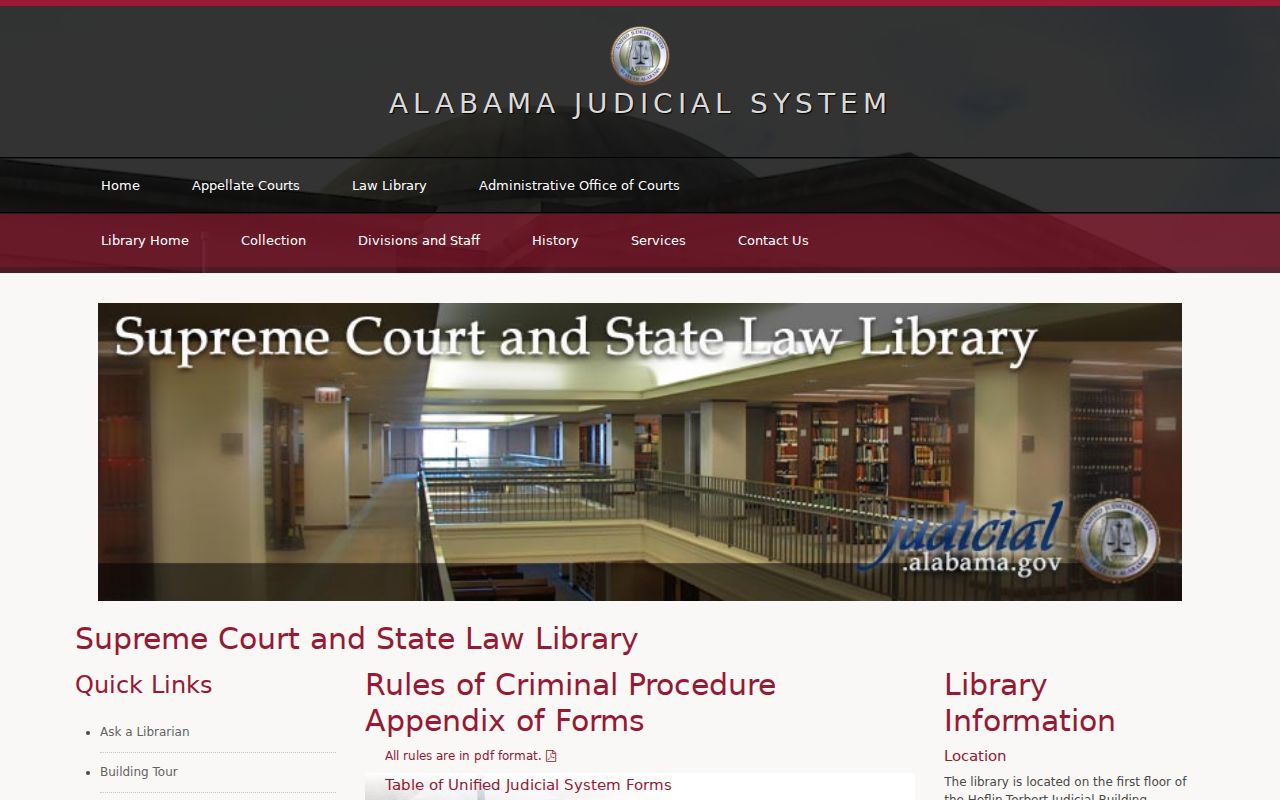
The list helps a requester name the document when asking the Limestone County clerk. It does not prove a warrant is active.
How Limestone County Arrest Warrants Are Served
Under Alabama Rule 3.3, any Alabama law-enforcement officer may execute an arrest warrant. Sheriffs and deputies carry most of the load in Limestone County. Municipal police act within their own authority. The rule's notes also mention constables and marshals. The court issues the warrant; officers carry it out. After the arrest, the officer endorses how and when service occurred and returns the warrant to the named clerk. Custody then feeds into the court process. At the initial appearance the court confirms identity, states the charge, advises the rights to counsel and silence, weighs release conditions, and explains the preliminary-hearing right on a felony complaint. A fresh service return may outrank an old entry in Limestone County records.
No Limestone Arrest Warrant Roster
The Limestone County Sheriff's Office page covers contacts, divisions, inmate access, and public-safety links. It posts no public arrest-warrant roster. No dedicated name-search form exists either. The inmate tool shows current custody only. That tool is not a Limestone County arrest warrant search, and an empty result does not mean no warrant exists. For a known Circuit or District case, call the Circuit Clerk at (256) 233-6406 and ask for the Criminal or Warrants records route. Routing questions go to the Sheriff at (256) 232-0111. A city matter starts with that municipal court. Alabama's internal E-Warrants functions and ALEA reporting stay internal, with no public statewide name-search portal.
Key point: Confirm a current status with the issuing court or authorized agency. An absent web result is not warrant clearance.
Arrest Warrant vs Summons vs Bench Warrant
These instruments can appear in the same Limestone County case but command different acts. An arrest warrant rests on probable cause. A summons just directs voluntary appearance. An alias or bench warrant usually follows a missed duty in an existing case; Alabama's C-65a label is “Alias Warrant of Arrest for Failure of Defendant to Appear.”
| Feature | Arrest Warrant | Summons | Bench Warrant |
|---|---|---|---|
| What It Orders | Arrest and presentment | Appearance without initial arrest | Arrest after a missed duty |
| Basis | Indictment or probable cause | Charge where Rule 3.1 conditions permit | Failure to appear or comply |
| Who Issues It | Judge, magistrate, or authorized official | The court through authorized process | The court handling the existing case |
| Response | Counsel, surrender, and bond planning | Appear on the stated date | Ask about appearance or recall |
Limestone Arrest Warrant Courts
Limestone County splits its warrant work by court level. The 39th Judicial Circuit Court takes felony prosecutions and the orders that come with them. Limestone District Court covers misdemeanors and felony preliminary hearings. Athens Municipal Court handles city ordinance matters. Probate Court rarely touches a criminal warrant. That division shapes your next step. An initial appearance under Rule 4.4 brings notice of the charges and your core rights, and you can ask there how counsel is obtained, what release order applies, and whether a preliminary hearing is available. Only the issuing court can recall or change its own order. The Clerk can explain record access and route a file, though not give legal advice. Federal matters sit apart: a federal warrant or docket runs through the Northern District of Alabama and its agencies, not the Limestone County court index.
What to Do If There's a Warrant for You
Begin with a narrow self-check. Gather the court name, case or citation number, approximate date, and any notice or receipt. Then ask the issuing court for current status and exact instructions. Circuit or District Court matters in Limestone County go through the Circuit Clerk. If an official directs you to the Sheriff, call the published non-emergency number. Do not send a full birth date or Social Security number through ordinary email unless the agency offers a secure method. A lawyer earns their fee here. Counsel can plan a voluntary surrender, sort out whether bond may be posted, and ask whether a motion to recall or quash is legally available. "Quash" means the court sets the warrant aside. Walking in does not guarantee release. Limestone County runs no general amnesty or safe-surrender event. Alabama Rule 7.2 guides release and bail, but the actual court order controls.
- Confirm the issuing court and current arrest-warrant status.
- Ask counsel or the court what appearance, surrender, or recall process applies.
- Confirm bond terms with the court or authorized bond office.
- Keep the filed order, service record, and every receipt after resolution.
Important: Speak with a lawyer before surrendering. An active arrest warrant may be served during any lawful contact with police.
Limestone Arrest Warrant Privacy
Alabama treats public records as open, within limits. Alabama Code §36-12-40 grants access to public writings subject to other law. Not everything opens up. Warrant affidavits, juvenile files, sealed matters, and active investigative records can all stay closed. Juvenile records get special protection under §12-15-134, and courts may redact addresses, victim data, and sensitive identity details. Ask each custodian for its process. The Limestone County Commission's public-record form covers Commission-held records only; do not assume it binds the Circuit Clerk, the Sheriff, or a city court. A request tied to a court, case number, date range, and document type works far better than a demand for "all warrants."